
A subpanel is a smaller distribution panel supplied from a breaker in the main service equipment. It can add circuit spaces near a garage, addition, workshop, or EV charger, but it does not increase the amount of power available from the utility. That distinction—space versus capacity—is the first decision in every subpanel project.
A subpanel is installed by confirming that the existing service can support the new load, selecting a properly rated panel and feeder breaker, running a four-wire feeder, keeping the neutral isolated from the equipment-grounding bar, installing any required building disconnect and grounding electrodes, and completing permit, testing, and inspection. Wire and breaker sizes must be engineered for the actual load, conductor material, temperature ratings, distance, and installation method.
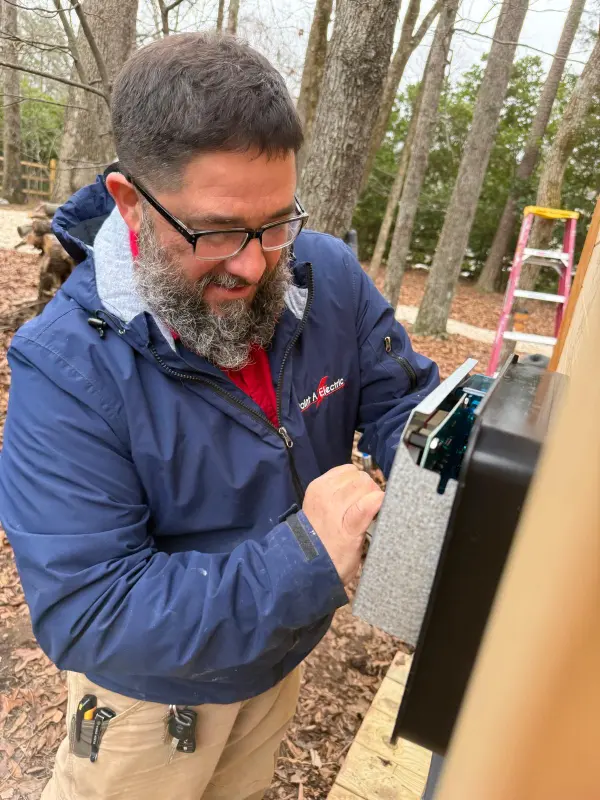
Because the main panel and feeder terminations can expose workers to severe shock and arc-flash hazards, this is an overview for planning and proposal review—not a live-wiring tutorial.
What a subpanel does—and what it does not do
| Subpanel can… | Subpanel cannot… |
|---|---|
| Add breaker spaces for new branch circuits. | Increase the utility service rating by itself. |
| Shorten branch-circuit runs to a garage, addition, or detached shop. | Correct an overloaded or undersized service without load analysis. |
| Create a logical local shutoff and circuit directory. | Make mixed or incompatible breaker brands acceptable. |
| Support planned loads when the service and feeder have capacity. | Replace a required permit, inspection, grounding system, or disconnect. |
When a subpanel is a good option
- The main panel is in good condition and has service capacity but lacks usable breaker spaces.
- A garage, finished basement, addition, pool area, workshop, or detached structure needs several circuits.
- Long branch-circuit runs would be inefficient or difficult to manage from the main panel.
- A future project will benefit from organized local distribution, provided the load calculation supports it.
A subpanel is not the right answer when the service is already at or near capacity, the main equipment is damaged or obsolete, the proposed loads require utility/service changes, or the new location cannot meet access and working-clearance rules. In those cases, compare a subpanel with a service or panel upgrade or an approved load-management strategy.
How a subpanel is wired
The feeder normally contains four conductors: two ungrounded conductors, one grounded (neutral) conductor, and one equipment-grounding conductor. The feeder breaker in the supplying panel protects that feeder. Inside the subpanel, the ungrounded conductors feed the buses; the neutral lands on an isolated neutral bar; and equipment grounds land on a separate bar bonded to the metal enclosure.
| Critical rule: The neutral and equipment-grounding paths are normally separated in a downstream subpanel. Rebonding them can place normal return current on metal enclosures and grounding paths. The service bonding point and project conditions must be identified correctly before the equipment is configured. |
The professional subpanel installation process
- Define the loads. List existing and planned circuits, continuous loads, motors, heating equipment, EV charging, and likely future use.
- Calculate service and feeder capacity. The electrician checks the main service, demand factors, feeder load, panel rating, and whether load management or a service upgrade is necessary.
- Choose the location and enclosure. The location needs required working space, accessibility, environmental rating, suitable mounting, and protection from physical damage or moisture.
- Select a listed panel and compatible breaker. Bus rating, main-lug or main-breaker arrangement, interrupting rating, feeder breaker, and branch breakers must form a listed, supportable system.
- Plan the feeder path. Conductor material, insulation, terminals, raceway/cable type, distance, voltage drop, temperature, wet-location exposure, and physical protection all affect design.
- Install the four-wire feeder and isolate neutral from ground. Grounded conductors and equipment grounds terminate on their designated bars; bonding hardware is configured for a downstream panel.
- Address detached-building requirements. A detached garage or shop may need a building disconnect and grounding electrodes in addition to the equipment-grounding conductor. Ground rods do not replace the feeder’s equipment ground.
- Install and label branch circuits. Breakers are chosen for conductor ampacity, load, location, panel listing, and any required AFCI/GFCI protection.
- Torque, test, inspect, and document. The electrician follows equipment torque specifications, verifies operation, produces a specific directory, and closes the permit after inspection.
How big should a subpanel be?
A common search asks whether to install a 60-amp or 100-amp subpanel. The correct rating is not selected by habit. It comes from the calculated load and future plan, then the feeder and overcurrent protection are coordinated with the equipment. A panel may have a higher bus rating than the feeder supplying it; the feeder breaker still limits available current.
| Question | Why it changes the design |
|---|---|
| What will run at the same time? | Demand and continuous loads determine required capacity. |
| How long is the feeder run? | Distance can affect voltage-drop planning and material cost. |
| Copper or aluminum conductors? | Ampacity, termination ratings, installation practices, and price differ. |
| Attached or detached structure? | Disconnect, grounding-electrode, routing, trenching, and weather exposure can change. |
| Indoor, outdoor, or damp location? | The enclosure, raceway, fittings, and conductor insulation must suit the environment. |
| Which future loads are realistic? | Reasonable spare spaces are useful; imagined load should not replace calculation. |
Why this article does not give a universal feeder wire size
A chart that says ‘use this wire for a 100-amp subpanel’ can omit conductor material, terminal temperature rating, insulation, raceway fill, ambient temperature, distance, dwelling feeder rules, and the actual load. Those variables can change the legal and safe answer. Use the panel label, conductor listing, current local code, manufacturer instructions, and a project-specific calculation—not a simplified internet chart.
Attached garage versus detached building
| Issue | Attached area | Detached structure |
|---|---|---|
| Feeder | Usually routed within or on the same building. | May require underground or overhead routing with added physical/weather protection. |
| Grounding | Four-wire feeder; isolated neutral/ground in the subpanel. | Four-wire feeder plus grounding electrodes as required; electrodes do not replace equipment ground. |
| Disconnect | Panel arrangement depends on the building layout and code. | A building disconnect is commonly required and must be properly located/configured. |
| Cost drivers | Access, wall/ceiling finish, distance, and corrections. | Trenching, conduit, restoration, weather-rated equipment, distance, and inspections. |
Subpanel installation cost in the Charlotte area
There is no reliable single price without a site visit. A straightforward attached-building subpanel often falls in a planning range of roughly $1,500–$4,000, while long feeders, difficult access, trenching, detached buildings, service corrections, or larger load work can push the total above that range. A Charlotte competitor publicly cites about $2,500 as an average; treat any online figure as a benchmark, not a bid.
| Cost driver | Lower-cost condition | Higher-cost condition |
|---|---|---|
| Panel location | Near the main panel with open access | Long route through finished areas or outdoors |
| Capacity | Existing service supports the calculated load | Service upgrade or load management required |
| Structure | Same building | Detached garage/shop with trenching and restoration |
| Equipment | Standard indoor panel and supported breaker family | Outdoor/weather-rated gear, disconnects, specialty protection |
| Corrections | Existing system is code-ready | Grounding, bonding, damage, obsolete gear, or access corrections |
A useful proposal separates labor, feeder materials, subpanel and breakers, permit/inspection, trenching or patching, service/load-management work, and allowances. Low bids that omit those items are hard to compare.
Charlotte permits and inspection
Mecklenburg County requires permits when electrical systems are installed, extended, altered, or generally repaired. Adding a feeder and subpanel therefore requires permit and inspection. Detached-building work or EV charging may also trigger additional plan, load, or site considerations. Your contractor should state who pulls the permit and who resolves inspection corrections.
North Carolina’s code-adoption schedule does not always match national article dates. As of August 2026, the 2023 State Electrical Code adoption remains on indefinite delay. The locally applicable rules depend on building type and the authority having jurisdiction, so use current Mecklenburg County and state guidance rather than a generic ‘2026 code’ claim.
Common subpanel mistakes
- Treating an empty main-panel slot as proof that the service has capacity.
- Installing only three feeder conductors or rebonding neutral and ground downstream.
- Using grounding electrodes as a substitute for the feeder equipment-grounding conductor.
- Selecting feeder wire from a one-line chart without accounting for material, terminals, installation method, distance, or temperature.
- Using breakers that are not listed for the subpanel, even if they seem to fit.
- Ignoring working clearances, accessibility, outdoor ratings, corrosion, and physical protection.
- Skipping permit, inspection, torque specifications, circuit labels, or future documentation.
Frequently asked questions
Does a 100-amp subpanel give my house 100 more amps?
No. It provides a distribution point that can be supplied up to its feeder limit, but all loads still count toward the service calculation. Only approved service changes or load-management strategies change how capacity is made available.
Should a subpanel have a main breaker?
It depends on the location, building-disconnect requirements, number of disconnects, and equipment design. A main breaker in a subpanel can serve as a local disconnect, but it does not replace proper upstream feeder protection or automatically solve detached-building rules.
Can neutral and ground share the same bar in a subpanel?
Normally no. Downstream from the service bonding point, the neutral should remain isolated from equipment grounds and the enclosure. Project-specific service-disconnect placement must be verified.
Is a subpanel better than a panel upgrade?
A subpanel is often better when the service is healthy and has capacity but needs more spaces or a nearer distribution point. A service or main-panel upgrade is more likely when capacity, condition, rating, equipment support, or utility service is the constraint.
| Planning a garage, addition, workshop, or EV circuit?
Point A Electric can assess load, panel condition, feeder routing, and permits across the Charlotte area. Call 704-940-0777 or request a subpanel estimate. NC electrical license #23498. |